Below are some highlights from my research and patents. For the full list, please see my Google Scholar profile.
Machine Learning Research
[NeurIPS] Effective Biological Representation Learning by Masking Gene Expression
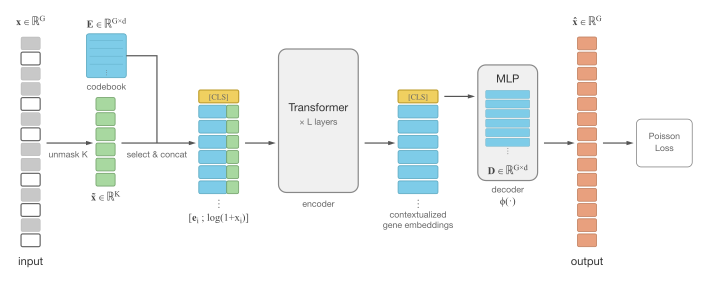
Code RNA sequencing produces rich and diverse datasets of gene expression, offering compelling insights into cellular state and function that have many applications in drug discovery. Modeling such data is challenging due to inherent technical noise and experimental batch effects, as evidenced by many existing transcriptomic foundation models (FMs) underperforming relative to linear baselines. Such results raise the question of whether deep representation learning provides a distinct advantage over the direct use of raw transcript counts. Our work explores this by developing a new self-supervised model, TxFM, with a focus on inductive representation learning evaluations. TxFM employs a masked autoencoding approach tailored to diverse RNA-seq count data, and our ablation study empirically identifies crucial architecture configurations required for strong transfer performance. Additionally, we curate a public training corpus, DiverseRNA-1.4M, and find that TxFM trained on this curated dataset yields high-fidelity gene representations that outperform FMs trained on atlas-scale corpora over 100x larger. Overall, our results indicate that inductive self-supervised learning is a viable modeling approach for transcriptomics representation, provided a careful synthesis of model architecture and training data curation.
[CVPR (oral)] Parameter-free Online Test-time Adaptation
Code Training state-of-the-art vision models has become prohibitively expensive for researchers and practitioners. For the sake of accessibility and resource reuse, it is important to focus on adapting these models to a variety of downstream scenarios. An interesting and practical paradigm is online test-time adaptation, according to which training data is inaccessible, no labelled data from the test distribution is available, and adaptation can only happen at test time and on a handful of samples. In this paper, we investigate how test-time adaptation methods fare for a number of pre-trained models on a variety of real-world scenarios, significantly extending the way they have been originally evaluated. We show that they perform well only in narrowly-defined experimental setups and sometimes fail catastrophically when their hyperparameters are not selected for the same scenario in which they are being tested. Motivated by the inherent uncertainty around the conditions that will ultimately be encountered at test time, we propose a particularly 'conservative' approach, which addresses the problem with a Laplacian Adjusted Maximum-likelihood Estimation (LAME) objective. By adapting the model's output (not its parameters), and solving our objective with an efficient concave-convex procedure, our approach exhibits a much higher average accuracy across scenarios than existing methods, while being notably faster and have a much lower memory footprint.
[ICLR] Attacking deep networks with surrogate-based adversarial black-box methods is easy
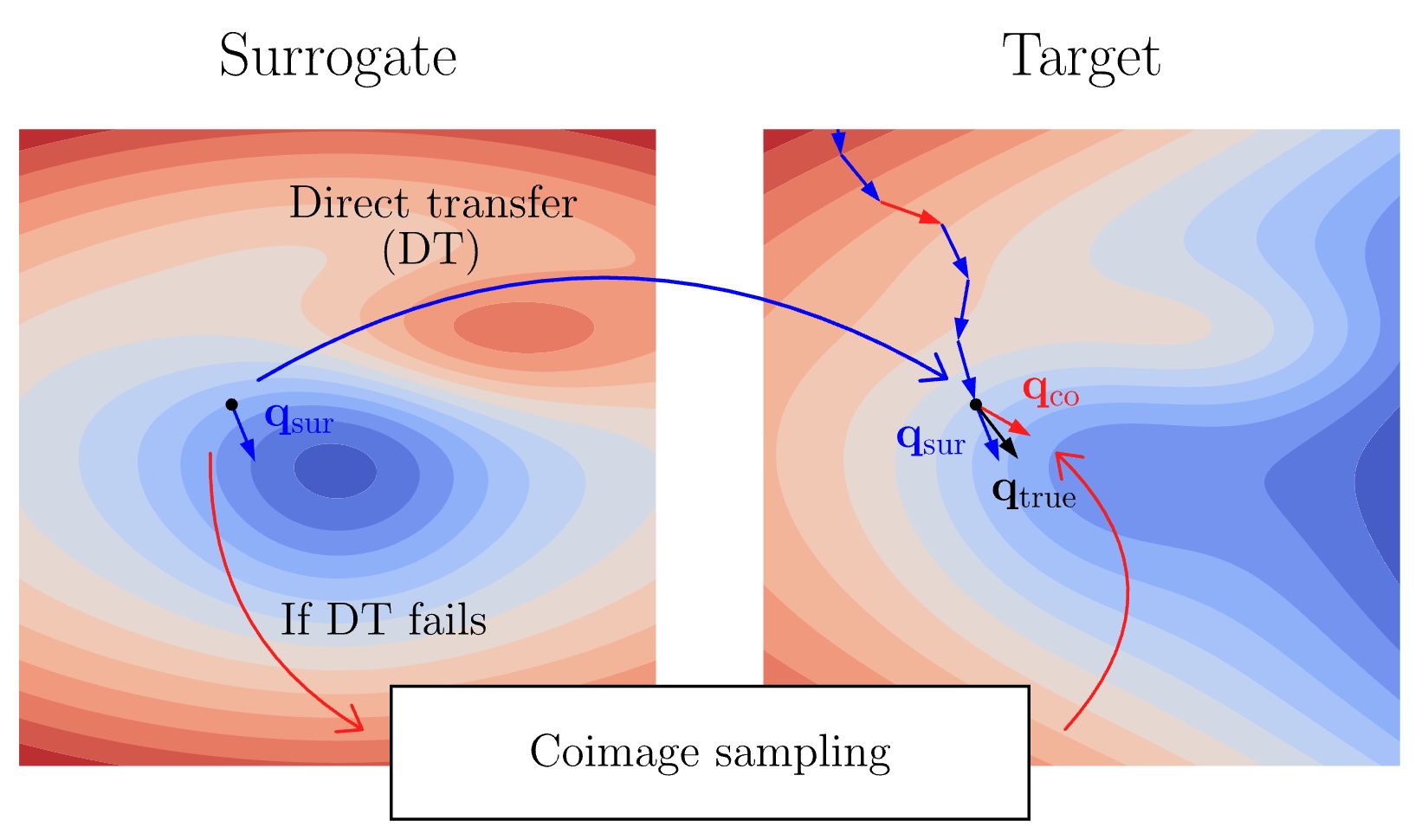
Code Video Blog Post A recent line of work on black-box adversarial attacks has revived the use of transfer from surrogate models by integrating it into query-based search. However, we find that existing approaches of this type underperform their potential, and can be overly complicated besides. Here, we provide a short and simple algorithm which achieves state-of-the-art results through a search which uses the surrogate network's class-score gradients, with no need for other priors or heuristics. The guiding assumption of the algorithm is that the studied networks are in a fundamental sense learning similar functions, and that a transfer attack from one to the other should thus be fairly 'easy'. This assumption is validated by the extremely low query counts and failure rates achieved: e.g. an untargeted attack on a VGG-16 ImageNet network using a ResNet-152 as the surrogate yields a median query count of 6 at a success rate of 99.9%.
[NeurIPS] Do Different Tracking Tasks Require Different Appearance Models?
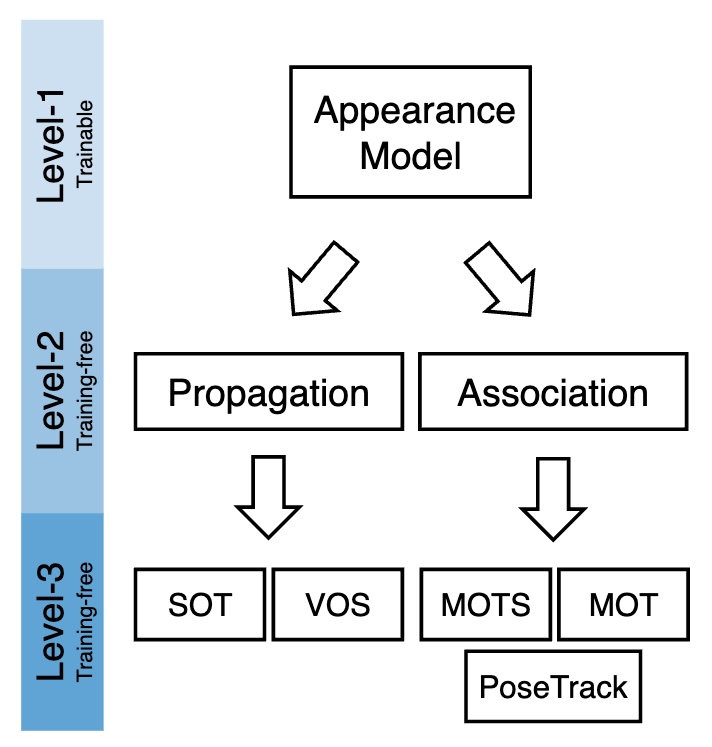
Code Tracking objects of interest in a video is one of the most popular and widely applicable problems in computer vision. However, with the years, a Cambrian explosion of use cases and benchmarks has fragmented the problem in a multitude of different experimental setups. As a consequence, the literature has fragmented too, and now novel approaches proposed by the community are usually specialised to fit only one specific setup. To understand to what extent this specialisation is necessary, in this work we present UniTrack, a solution to address five different tasks within the same framework. UniTrack consists of a single and task-agnostic appearance model, which can be learned in a supervised or self-supervised fashion, and multiple heads that address individual tasks and do not require training. We show how most tracking tasks can be solved within this framework, and that the same appearance model can be successfully used to obtain results that are competitive against specialised methods for most of the tasks considered. The framework also allows us to analyse appearance models obtained with the most recent self-supervised methods, thus extending their evaluation and comparison to a larger variety of important problems.
[NeurIPS] On episodes, prototypical networks, and few-shot learning
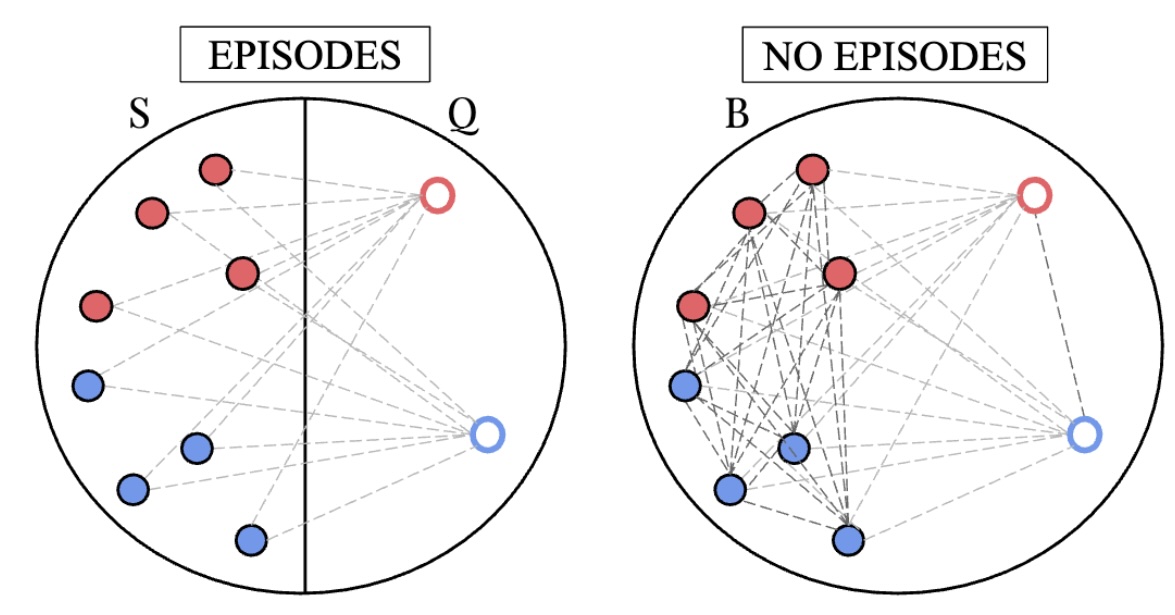
Code Episodic learning is a popular practice among researchers and practitioners interested in few-shot learning.It consists of organising training in a series of learning problems (or episodes), each divided into a small training and validation subset to mimic the circumstances encountered during evaluation.But is this always necessary? In this paper, we investigate the usefulness of episodic learning in methods which use nonparametric approaches, such as nearest neighbours, at the level of the episode.For these methods, we not only show how the constraints imposed by episodic learning are not necessary, but that they in fact lead to a data-inefficient way of exploiting training batches.We conduct a wide range of ablative experiments with Matching and Prototypical Networks, two of the most popular methods that use nonparametric approaches at the level of the episode.Their 'non-episodic' counterparts are considerably simpler, have less hyperparameters, and improve their performance in multiple few-shot classification datasets.
[CVPR] Making Better Mistakes: Leveraging Class Hierarchies with Deep Networks
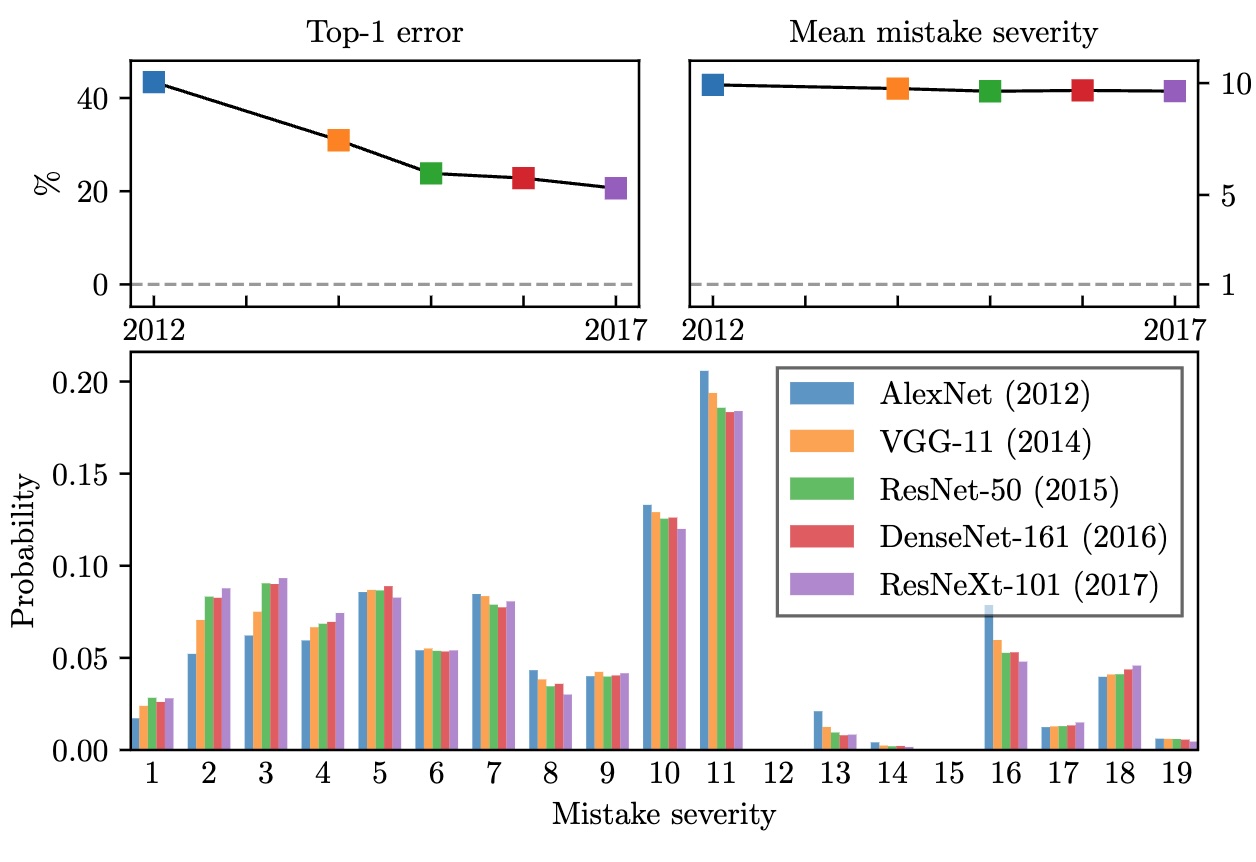
Code Deep neural networks have improved image classification dramatically over the past decade, but have done so by focusing on performance measures that treat all classes other than the ground truth as equally wrong. This has led to a situation in which mistakes are less likely to be made than before, but are equally likely to be absurd or catastrophic when they do occur. Past works have recognised and tried to address this issue of mistake severity, often by using graph distances in class hierarchies, but this has largely been neglected since the advent of the current deep learning era in computer vision. In this paper, we aim to renew interest in this problem by reviewing past approaches and proposing two simple methods which outperform the prior art under several metrics on two large datasets with complex class hierarchies: tieredImageNet and iNaturalist.
[NeurIPS and ICCV] Workshop series on Pre-registration in Machine Learning
Benchmarks on popular datasets have played a key role in the considerable measurable progress that machine learning has made in the last few years. But reviewers can be tempted to prioritize incremental improvements in benchmarks to the detriment of other scientific criteria, destroying many good ideas in their infancy. Authors can also feel obligated to make orthogonal improvements in order to “beat the state-of-the-art”, making the main contribution hard to assess. Pre-registration changes the incentives by reviewing and accepting a paper before experiments are conducted. The emphasis of peer-review will be on whether the experiment plan can adequately prove or disprove one (or more) hypotheses. Some results will be negative, and this is welcomed. This way, good ideas that do not work will get published, instead of filed away and wastefully replicated many times by different groups. Finally, the clear separation between hypothesizing and confirmation (absent in the current review model) will raise the statistical significance of the results.
[CVPR] Fast online object tracking and segmentation: A unifying approach
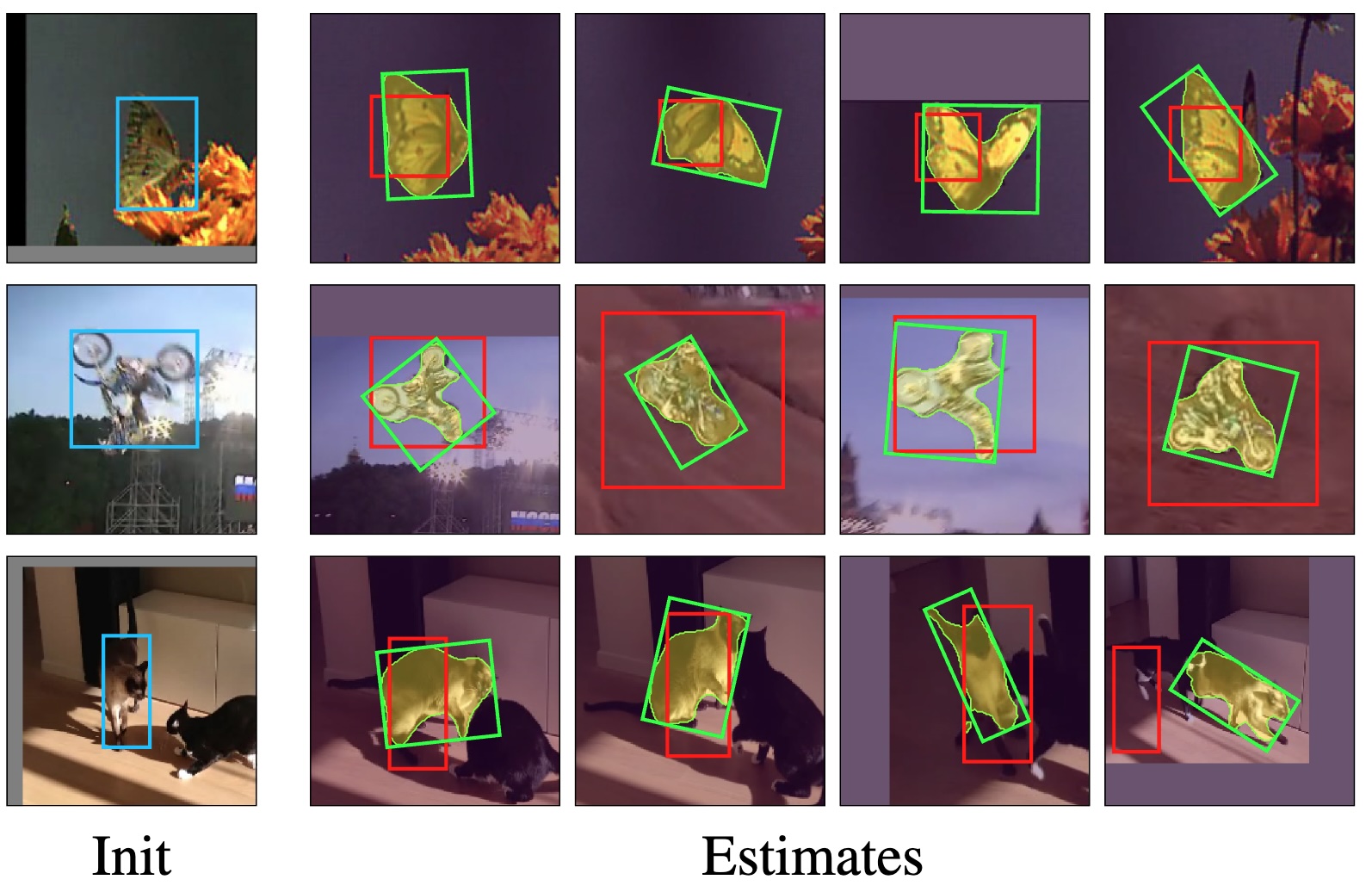
Code TPAMI journal version In this paper we illustrate how to perform both visual object tracking and semi-supervised video object segmentation, in real-time, with a single simple approach. Our method, dubbed SiamMask, improves the offline training procedure of popular fully-convolutional Siamese approaches for object tracking by augmenting their loss with a binary segmentation task. Once trained, SiamMask solely relies on a single bounding box initialisation and operates online, producing class-agnostic object segmentation masks and rotated bounding boxes at 55 frames per second. Despite its simplicity, versatility and fast speed, our strategy allows us to establish a new state of the art among real-time trackers on VOT-2018, while at the same time demonstrating competitive performance and the best speed for the semi-supervised video object segmentation task on DAVIS-2016 and DAVIS-2017.
[PhD (DPhil) Thesis - University of Oxford] Learning (to learn) from few examples

The availability of large labelled datasets has played a crucial role in the recent success of deep neural networks. However, there are many situations in which training data is scarce. For instance, in the case of object tracking, such a limitation arises directly from the definition of the problem, which requires an estimate of the position of an object of interest in every frame of a video with the sole supervision of a bounding box in the first frame. Another scenario which can be doomed by data scarcity is classification. For example, one might want to identify the species of a rare insect with a single reference image, or train a tumour classification system from a few labelled MRI scans. For both tracking and classification, we propose techniques that sidestep per-task data scarcity by leveraging a large number of small episodes, each characterised by a limited training set. This strategy is particularly novel for tracking, for which for many years the standard approach has been to train a discriminative model exclusively online, while the video is streaming. Moreover, we examine how this general approach can be framed as 'learning to learn', in the sense that the knowledge distilled within a training task is accrued and used across tasks. We show how such a framework allows one to devise systems that can be trained with a small amount of per-task data while also being dynamically tailored to the problem at hand. From a practical point of view, the proposed methods have a common focus on simplicity, efficiency and speed, achieved by exploiting the shape or redundancies of the data.
[ICLR] Meta-learning with differentiable closed-form solvers
Code Adapting deep networks to new concepts from a few examples is challenging, due to the high computational requirements of standard fine-tuning procedures. Most work on few-shot learning has thus focused on simple learning techniques for adaptation, such as nearest neighbours or gradient descent. Nonetheless, the machine learning literature contains a wealth of methods that learn non-deep models very efficiently. In this paper, we propose to use these fast convergent methods as the main adaptation mechanism for few-shot learning. The main idea is to teach a deep network to use standard machine learning tools, such as ridge regression, as part of its own internal model, enabling it to quickly adapt to novel data. This requires back-propagating errors through the solver steps. While normally the cost of the matrix operations involved in such a process would be significant, by using the Woodbury identity we can make the small number of examples work to our advantage. We propose both closed-form and iterative solvers, based on ridge regression and logistic regression components. Our methods constitute a simple and novel approach to the problem of few-shot learning and achieve performance competitive with or superior to the state of the art on three benchmarks.
[CVPR] End-to-end representation learning for the Correlation Filter
Code The Correlation Filter is an algorithm that trains a linear template to discriminate between images and their translations. It is well suited to object tracking because its formulation in the Fourier domain provides a fast solution, enabling the detector to be re-trained once per frame. Previous works that use the Correlation Filter, however, have adopted features that were either manually designed or trained for a different task. This work is the first to overcome this limitation by interpreting the Correlation Filter learner, which has a closed-form solution, as a differentiable layer in a deep neural network. This enables learning deep features that are tightly coupled to the Correlation Filter. Experiments illustrate that our method has the important practical benefit of allowing lightweight architectures to achieve state-of-the-art performance at high framerates.
[ECCV (VoT workshop)] Fully-convolutional siamese networks for object tracking
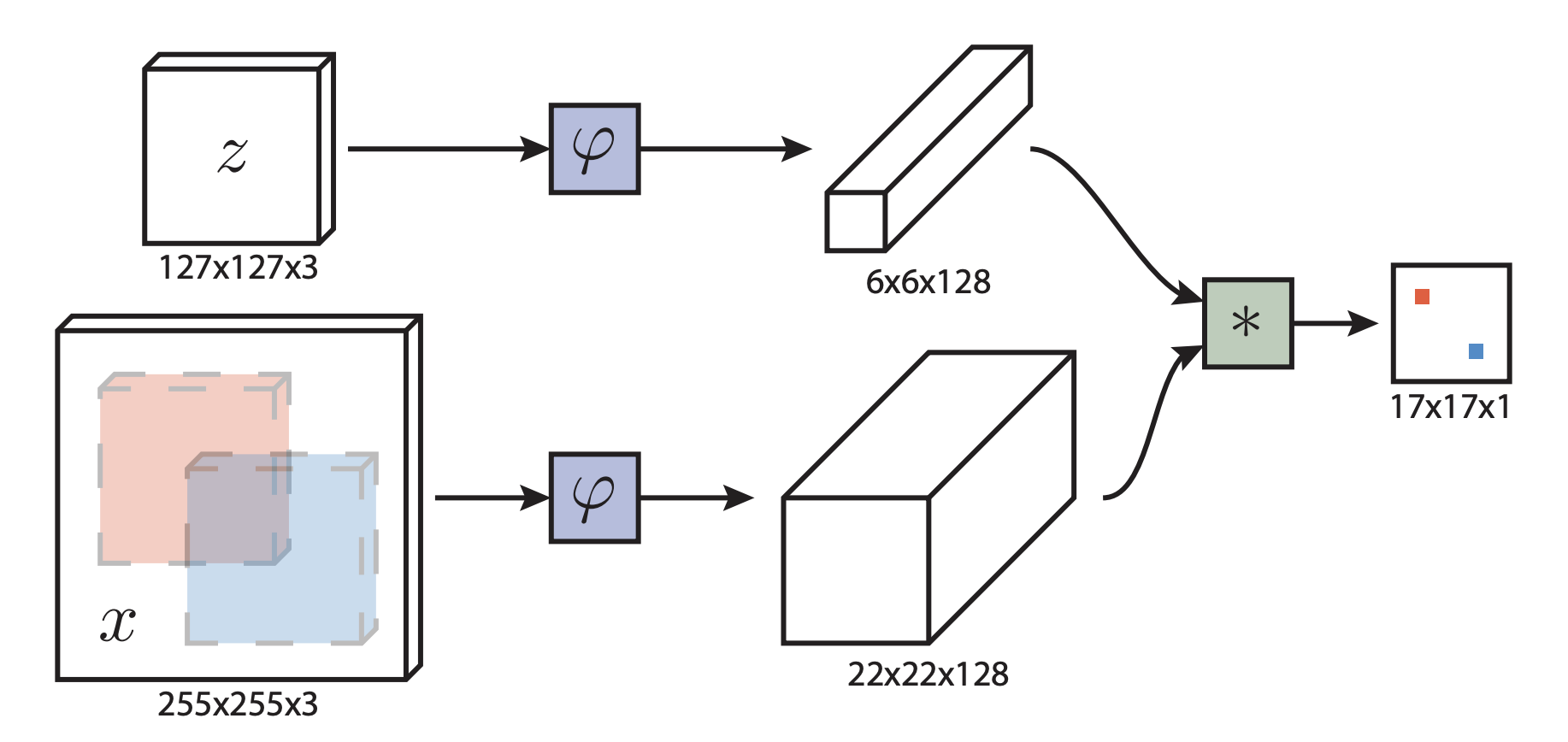
This work introduced a real-time object tracking framework using fully-convolutional Siamese (aka contrastive) networks trained offline on large-scale video data. By learning a generic similarity function between exemplar templates and search regions, the method eliminated traditional online model adaptation while achieving very competitive results at high framerates (~80 fps). Its key innovation – dense cross-correlation via bilinear layers for efficient sliding-window evaluation – became foundational for subsequent real-time trackers. The demonstration that deep similarity learning could generalize across video domains without test-time fine-tuning influenced the tracking community's shift toward offline-trained architectures, establishing an important baseline for balancing accuracy and speed in visual tracking systems.
[NeurIPS] Learning feed-forward one-shot learners
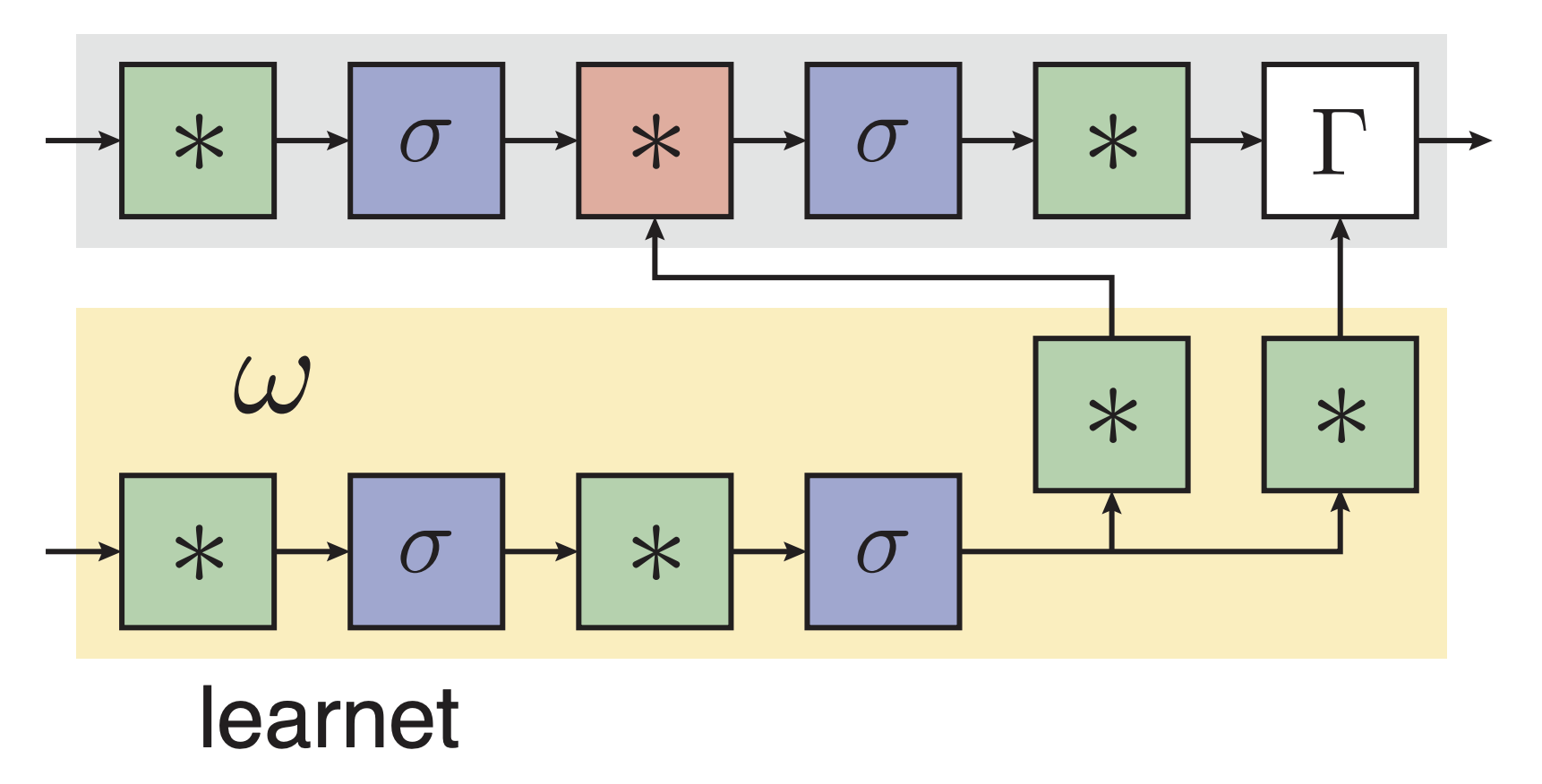
One-shot learning is usually tackled by using generative models or discriminative embeddings. Discriminative methods based on deep learning, which are very effective in other learning scenarios, are ill-suited for one-shot learning as they need large amounts of training data. In this paper, we propose a method to learn the parameters of a deep model in one shot. We construct the learner as a second deep network, called a learnet, which predicts the parameters of a pupil network from a single exemplar. In this manner we obtain an efficient feed-forward one-shot learner, trained end-to-end by minimizing a one-shot classification objective in a learning to learn formulation. In order to make the construction feasible, we propose a number of factorizations of the parameters of the pupil network. We demonstrate encouraging results by learning characters from single exemplars in Omniglot, and by tracking visual objects from a single initial exemplar in the Visual Object Tracking benchmark.
[CVPR] Staple: Complementary Learners for Real-Time Tracking
Code Correlation Filter-based trackers have recently achieved excellent performance, showing great robustness to challenging situations exhibiting motion blur and illumination changes. However, since the model that they learn depends strongly on the spatial layout of the tracked object, they are notoriously sensitive to deformation. Models based on colour statistics have complementary traits: they cope well with variation in shape, but suffer when illumination is not consistent throughout a sequence. Moreover, colour distributions alone can be insufficiently discriminative. In this paper, we show that a simple tracker combining complementary cues in a ridge regression framework can operate faster than 80 FPS and outperform not only all entries in the popular VOT14 competition, but also recent and far more sophisticated trackers according to multiple benchmarks.